Treatment For Adolescent Idiopathic Scoliosis
In the public hospital system If your child's curve is less than 20º, it will simply be observed at 4 to 6 month intervals. This 'watch and wait' approach could stretch across several appointments over many months. With no treatment during this extended period, whether your child is in their early onset stage or pubertal growth spurt, t(opens in new tab)he curve could quickly progress.(opens in new tab)
If their curve progresses to 25º or more, and your child is either still in their early onset stage stage or pubertal growth spurt, which in the case of a girl would be before menarche, the need for treatment is extremely urgent and bracing should be prescribed. Should bracing not be successful, and your child's curve continues to progress above 40º, spinal fusion surgery, as a matter of course, is always prescribed. No alternative treatment options are considered.
Critical Questions for Parents

Thoracic Spine Correction
Critical questions then for you: should treatment be provided earlier, irrespective of the curve magnitude (Cobb Angle), rather than after many months of 'Watching and Waiting' Would earlier intervention of bracing have been a timely and more appropriate treatment? And, if bracing is prescribed at some point, is the hospital's generic symmetrical Boston brace the only option, or is there a choice, perhaps a Chêneau style 3D asymmetricl brace?
If the hospital's brace is the only option, what is the likelihood it will reduce your child's curve, or at the very least stop it from progressing to over 40°, the arbitrary threshold at which spinal fusion surgery is prescribed? And, with regards to spinal fusion surgery, what are the risks and possible long term complications? Would living with and managing idiopathic scoliosis with conservative treatment be a better option?
Risk of Curve Progression
Curve progression is possible whenever substantial growth remains.
Scoliosis research (Marshall & Tanner 1969, Lonstein & Carlson 1984, Dimeglio 2001, Sanders 2008) has confirmed that the earlier the onset of idiopathic scoliosis, the greater the risk of progression. For example a child with a thoracic curve (the most common AIS pattern) has a higher progression risk if their curve is greater than >25° before the peak growth phase during their adolescent growth spurt. The highest risk of progression directly relates to: skeletal maturiy; remaining growth; and curve magnitude.
In girls, peak growth occurs on average 6 to 12 months before Menarche (first menstrual period), though there are exceptions. After Menarche maximum growth has usually passed (Dimeglo 2001). However, significant spinal growth nevertheless remains, but progression risk decreases, until it eventually stops at skeletal maturity. In general, for girls this is usually age 14 and for boys age 16.(opens in new tab)
In all cases of adolescent idiopathic scoliosis, especially where there is a high risk of progression, timely and appropriate conservative treatment is key (opens in new tab)to preventing curves progressing.
So finally, the question you need to ask is what 'alternative' helpful treatment options are available, which if undertaken during and in addition to the hospital's approach of "watching and waiting", could help stop progression, and possibly even reduce your child's curve.
Schroth Method Scoliosis Exercise Treatment
The following images are those of an adolescent female patient, who over a 2 year period, committed to a Schroth Method Patient_Parent Program(opens in new tab) in conjunction with wearing a 3D Chêneau style asymmetrical brace.(opens in new tab) Her posture, as can be seen, improved dramatically.
-
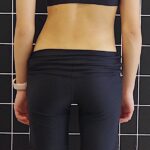
- 07-04-2021
-

- 12-04-2023
-
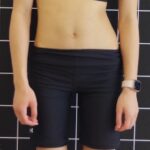
- 07-04-2021
-

- 12-04-2023
Schroth physiotherapeutic scoliosis-specific exercise treatment (opens in new tab)have been proven: to improve posture, mobility and function; and reduce pain and disability; and prevent progression; in patients diagnosed with idiopathic scoliosis. Schroth exercises when performed in conjunction with bracing have improved bracing outcomes in patients with curvatures greater than 40º degrees, thus avoiding the need for spinal fusion surgery.
Adolescent Idiopathic Scoliosis is a three-dimensional (3D) disorder and therefore requires a 3D conservative treatment approach.(opens in new tab) As each patient's scoliosis is unique, our Schroth Patient-Parent Programs (opens in new tab)are customised to meet the needs of individual patients, redress their scoliosis,(opens in new tab) and elongate and stabilise their spine three-dimensionally.
Quality of Life
In terms of quality of life, as previously stated, there is evidence which suggests non-invasive conservative treatment, such as Schroth Method exercises and bracing, can prevent curvature progression in adolescent patients and avoid the risk of spinal fusion surgery.
A Critical Review written by the authors cited below concludes that: "there is no evidence that spinal fusion surgery improves quality of life for AIS [adolescent] patients versus natural history [of their scoliosis].”
Citation: Weiss HR, Moramarco M, Moramarco K. Risks and long-term complications of adolescent idiopathic scoliosis surgery versus non-surgical and natural history outcomes(opens in new tab). Hard Tissue, 2013 Apr 30;2(3):27.
Schroth Method
Treatment for Scoliosis
(To view all images on this page
and sidebar in an enlarged
slideshow just click on an image
at random.)

\