Major Thoracic Curvature Types:
- Thoracic Curve & Secondary Lumbar Curve
- Single Long Thoracic Curve & Prominent Hip
- Thoracic Curve & Thoracic/Cervical Curve
Thoracic Curve with Secondary Lumbar Curve
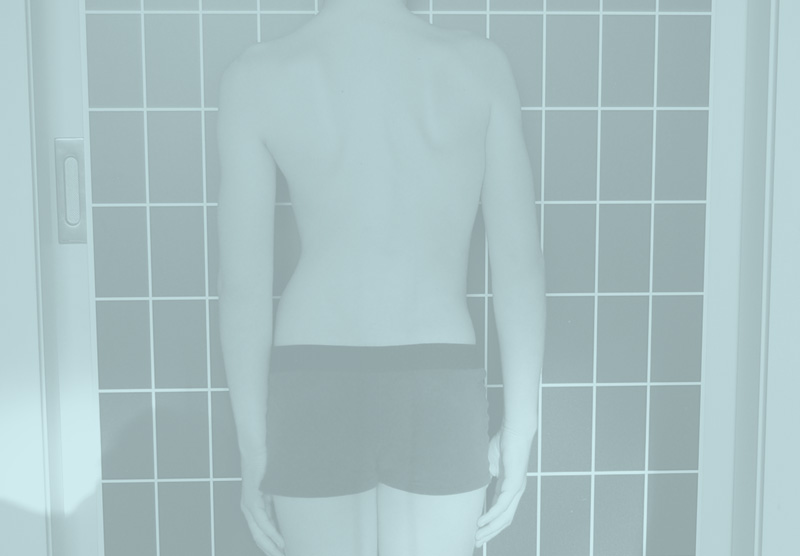
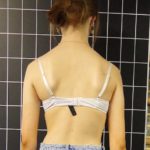
The upper body is shifted right, to the side of the thoracic curvature which moves sideways, backwards, and rotates in from the right. A secondary, functional curvature in the lumbar spine, which may also be rotated backwards, compensates for the major thoracic curvature. Weight bearing is through the right leg, the side of the thoracic curvature.
The right shoulder is protracted, rotating forward and internally, and is usually elevated. The lower tip of the right shoulder blade is prominent, raised and tilted away from the ribcage. The left shoulder is retracted and rotates backwards, the shoulder blade is also prominent and appears longer than the right.
The ribcage is rotated backwards and outwards on the right, and the spacing between the right side ribs is expanded; conversely on the left, the back and side of the rib cage is compressed and relatively flat, the left lower ribs are prominent on the front of the body.
Single Long Thoracic Curve with Prominent Hip
-
- (2)
(To view all images on this page and sidebar in an enlarged slideshow just click on an image at random.)
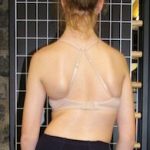
The upper body is shifted right, to the side of the thoracic curvature which moves sideways, backwards and rotates in from the right. The pelvis, in compensation, is shifted to the left, resulting in a prominent and elevated left hip, which may also be rotated backwards. The waistline is noticeably asymmetrical. Weight bearing is through the right leg, the side of the thoracic curvature.
Additionally, the clinical characteristics pertaining to the shoulders, shoulder blades, and ribcage are present in this type.
Thoracic Curve with Upper Thoracic-Cervical Curve
The upper body is shifted right, to the side of the thoracic curvature in the mid thoracic region, which moves sideways, backwards and rotates in from the right. However, in this pattern, a structural curvature in the upper thoracic rotates in the opposite direction, to the left, weight bearing though, is still through the right leg, the side of the major mid thoracic curvature.
The right shoulder is protracted, rotating forward and internally, the lower tip of the right shoulder blade is prominent, raised and tilted away from the ribcage. The left shoulder is rotated backwards and elevated; the shoulder blade is prominent, longer, and drops into the compressed ribcage. The left and right arms are internally rotated in their respective shoulder joints.
Major Lumbar Curvature Types:
- Lumbar Curve & Secondary Thoracic Curve
- Lumbar Curve, Secondary Thoracic Curve & Prominent Hip
- Single Lumbar Curve & Prominent Hip
Lumbar Curve & Secondary Thoracic Curve
The lumbar and Thoracic curvatures may be similar in magnitude, or the thoracic curvature may be greater. Nevertheless, the lumbar curvature is dominant - the major curvature. The lumbar curvature moves sideways to the left, backwards, and rotates in from the left. The upper body shifts towards the left side.
Additionally, the clinical characteristics pertaining to the thoracic curve, as described above for Thoracic with secondary Lumbar curve, are present in this type.
Lumbar Curve with Secondary Thoracic Curve & Prominent Hip
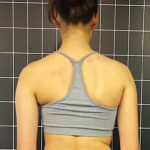
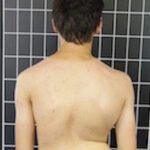
The lumbar curvature moves sideways to the left, backwards, and rotates in from the left. The upper body shifts towards the left side. With this type, the pelvis is shifted to the right resulting in a prominent and elevated right hip, which also rotates backwards. The waistline is noticeably asymmetrical - on the opposite the side of the lumbar curve a deep waist crease develops and the distance between the ribs and pelvis is reduced. Weight bearing remains through the left leg, the side of the lumbar curvature.
Additionally, the clinical characteristics pertaining to the thoracic curve, as described above for Thoracic with secondary Lumbar curve, are present in this type.
Single Lumbar Curvature and prominent hip
As explained above, the lumbar curvature moves sideways to the left, backwards, and rotates in from the left. The upper body shifts towards the left side. With this type the pelvis shifts to the right resulting in a prominent and elevated right hip, which also rotates backwards. The waistline is noticeably asymmetrical (see additional notes above). Weight bearing is through the left leg, the side of the lumbar curvature.
The thoracic spine and ribcage remain symmetrical. However, when viewed from side on (sagittal plane) the mid/upper back may look normal, or appear as either a round back or flat back.
Idiopathic Scoliosis and Prominent Hips
So, we know Prominent Hips can present in both single Thoracic and Lumbar 'C' curves.
In 'S' Curves, which involve the Thoracic and Lumbar spine, Prominent Hips present only when the Lumbar curve is the dominant curve.
A noticeable asymmetry of a patient's waistline is an indication of a Prominent Hip.
For more detailed information on Prominent Hip types, Click Here.
Schroth Method Exercise Treatment for Major Curvature Types:
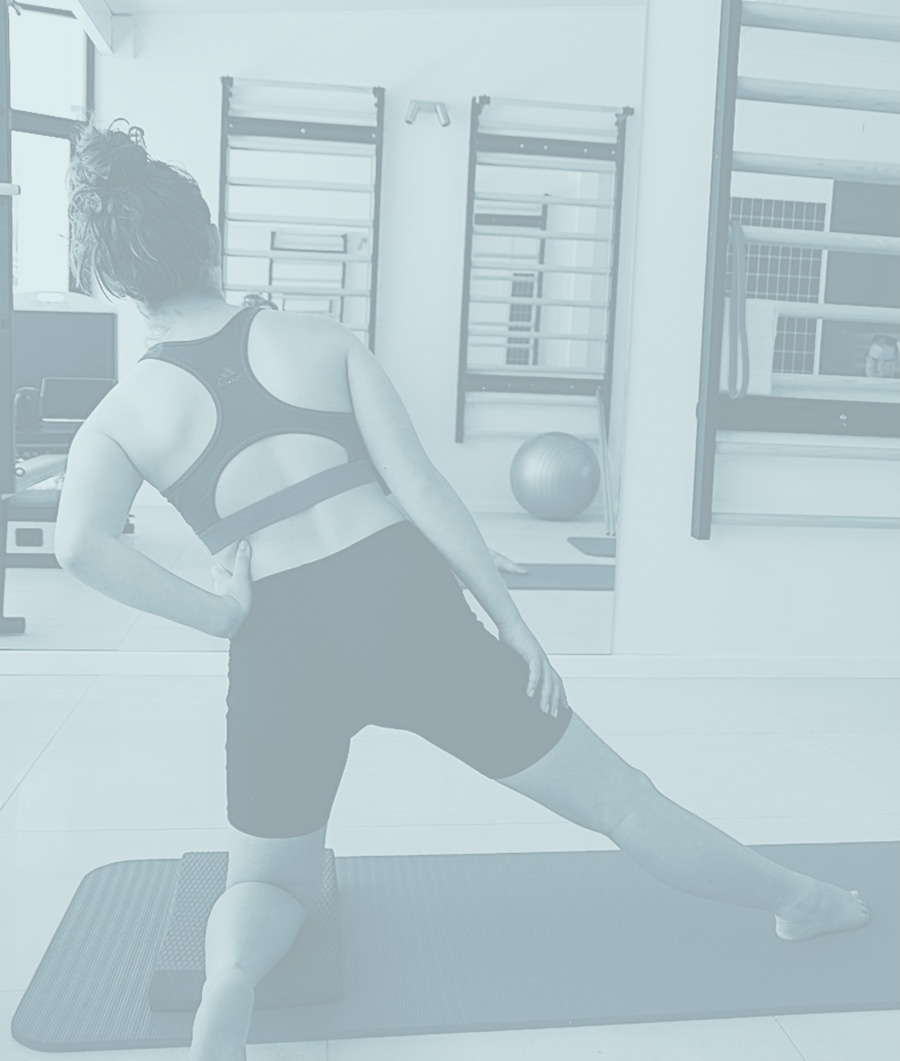
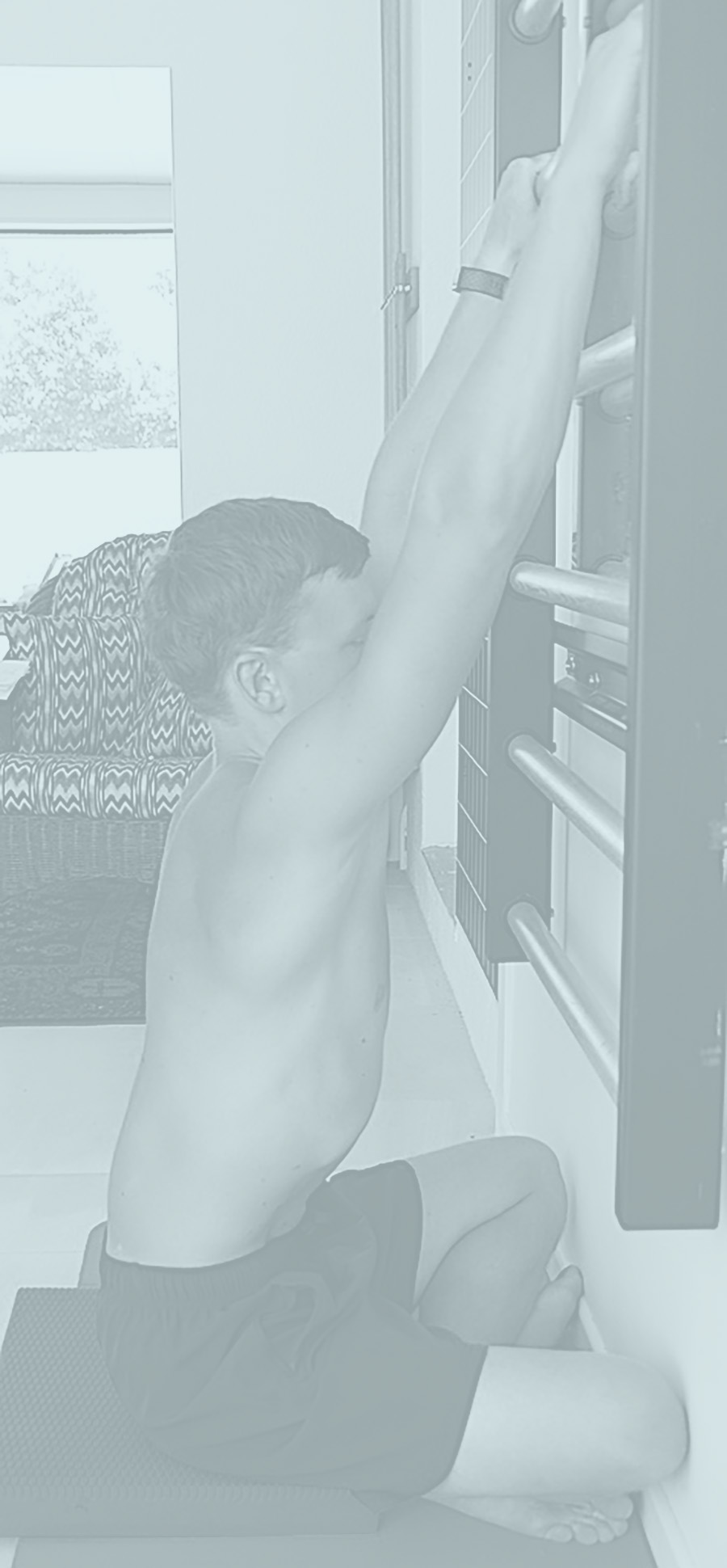
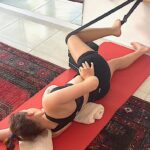
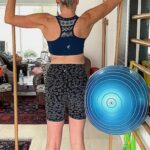
Irrespective whether a patient presents with a major curve type, or a less common idiopathic scoliosis curve type (as in image (6) below) , Schroth Method exercises are customized to meet the needs of individual patients.
-

- (1)
-

- (2)
-

- (3)
-

- (4)
-
- (5)
-
- (6)
(1) Single Long Right Thoracic curve with a Left Prominent Hip.
(2) Primary right Thoracic curve with Secondary Left Lumbar curve.
(3) Primary Left Lumbar curve with Secondary Right Thoracic curve.
(4) Left Lumbar curve with Right Prominent Hip.
(5) Left Lumbar curve with secondary Right Thoracic curve and Right Prominent Hip.
(6) Right Lumbar curve with secondary Left Thoracic curve and left Prominent Hip
Schroth Method
Treatment for Scoliosis
(To view all images on this page
and sidebar in an enlarged
slideshow just click on an image
at random.)